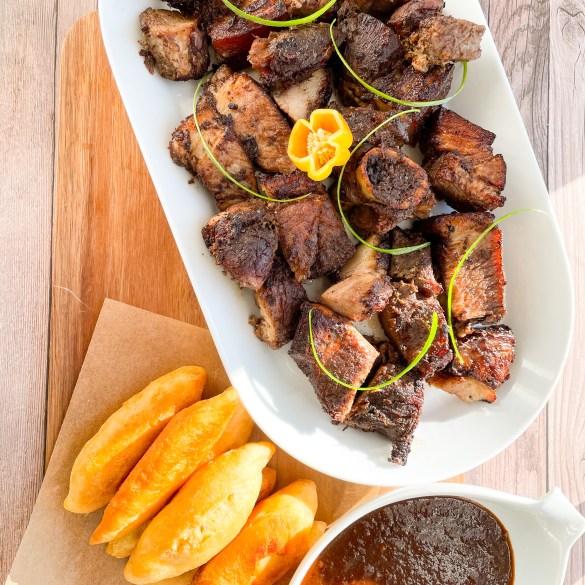
Jerk Pork is one of my favorite Jamaican street foods. It's just so good. The scotch bonnet peppers and allspice smoked on tender and fatty pork is one of the best indulgences you can get right on the streets of Jamaica or at any jerk stop or jerk center. Jerk pork is usually cooked on pimento wood and leaves over an open coal fire. For this recipe, I cooked the pork in the oven. It was delicious but it doesn't compare to a slow cook on the grill. Because I made this in winter, I had to opt for the oven over the grill. I will remake this again on the grill during the summer months for the flavor from the pimento wood chips I got on Etsy.
Marinade
The marinade for jerk pork is super important. Whatever it tastes like is what the meat will taste like. There is an infamous green seasoning trend taking off on social media with lots of herbs including cilantro and parsley. I am sure it is delicious but I would avoid putting that on jerk pork. If you want an authentic taste, you need green onions, onions, thyme, garlic, scotch bonnet, pimento and fresh ginger. Cilantro and parsley, while delicious, have very distinct flavors that will completely change the taste of this dish. Just leave out the traditional green seasoning when making this dish and stick to the basics down below on the ingredient list. Pork likes marinades. The longer you marinate this for, the better. 24 hours is a solid amount of time to get the flavor and tenderness that you want in the meat.
Cook Time and Broiler
Unfortunately with pork, the older the hog, the tougher the meat. Depending on the cut of meat you got from the grocers, you may need more or less time to cook it. A neat trick to help tenderize meat faster in the oven is to tent it with foil paper for three quarters of the cook time. The foil helps to trap the steam in the pan and helps to make the meat tender faster. Once the meat is cooked and tender, move it under the broiler of your oven for 5-8 mins on the low setting. The meat will caramelize and catch a slight sear that will liken it to being cooked on the grill.
Sides
Jerk pork is traditionally served with bread, bammy, bread or festival. I am serving it here with “festival” which is fried sweet bread. I will share a recipe for homemade festival bread soon.
Blend scallion, garlic, thyme, scotch bonnet. onion, shallot, ginger in 3 tablespoon of oil. Keep the blend a bit chunky so only pulse for a few seconds. You should NOT have a completely smooth paste. Aim to keep your blended mix chunky.
Crush pimento berries using a mortar and pestle. You may also put your berries in a clean kitchen towel and smash them with a heavy glass bottle or can. Do not mash it into a powder. Leave in large pieces.
Spoon blended mix onto pork that is already cleaned and pat dried. Add pimento berries.
Add meat seasoning, paprika, garlic powder, onion powder, white pepper, black pepper, gravy master and brown sugar.
Gently rub seasonings on pork. Cover and marinate for at least 24 hours.
When ready to cook, scrape seasoning bits away from the surface of the pork and place into deep baking pans. You do not need to add any liquid. The meat will render fat and lots of liquid.
Tent baking sheet with aluminum foil and bake on 375 degrees for 1.5-2hours until meat is tender.
Once pork is tender, slice into large chunks and return to a shallow baking pan/cookie sheet.
Discard fat from pan drippings with a large spoon. Spoon remaining pan drippings on top of pork.
Place pork under your oven broiler on "Lo" for about 8 mins until there is a bit of char/caramelization and smokiness on the pork.
Slice pork pieces and serve with your choice of sides.
Jerk BBQ Sauce:
Boil seasonings in about 1 cup of water after removing from pork.
Strain out the large pieces of seasoning with a strainer once boiled.
Add 2 tablespoon ketchup, 1 tablespoon fish and meat sauce, 1 tablespoon scotch bonnet sauce, 1 tablespoon of sugar and 2 tablespoon of honey.
Let sauce reduce and thicken
Related
Connect with Us on Socials: Follow Our Culinary Journey
The cooking time for jerk pork chops is typically 25 to 30 minutes in a preheated oven at 375°F (190°C). Ensure the internal temperature reaches at least 145°F (63°C) for safe consumption.
How long to bake jerk pork at 450 degrees?
Baking jerk pork at 450 degrees typically requires about 25 to 30 minutes. Ensure the internal temperature reaches at least 145 degrees Fahrenheit for safe consumption while maintaining the dish's flavorful juiciness.
How to cook jerk pork in oven?
Cooking jerk pork in the oven involves marinating the pork with a blend of spices, including scotch bonnet peppers and allspice, then baking it at a high temperature until it's tender and flavorful, typically around 375°F for about 1.5 to 2 hours.
How to cook Jamaican jerk diced pork?
Cooking Jamaican jerk diced pork involves marinating the pork in a blend of jerk spices, including scotch bonnet peppers, allspice, garlic, and thyme. After marinating, bake the pork in an oven at 375°F (190°C) for about 25-30 minutes until cooked through and tender.
How to bake jerk pork?
Baking jerk pork involves marinating the pork in a flavorful jerk seasoning, then placing it in a preheated oven at 350°F (175°C) for about 1.5 to 2 hours, or until the internal temperature reaches 145°F (63°C).
How to cook jerk pork on the stove?
Cooking jerk pork on the stove involves marinating the pork in a blend of spices and scotch bonnet peppers, then pan-searing it over medium-high heat until well-browned, followed by simmering it in the marinade until fully cooked and tender.
How to cook Jamaican jerk pork?
Cooking Jamaican jerk pork involves marinating pork with a flavorful blend of herbs and spices, including scotch bonnet peppers and allspice, then baking it in the oven at 350°F until tender and fully cooked, typically about 1.5 to 2 hours.
How to cook jerk pork in the oven?
Cooking jerk pork in the oven involves marinating the pork in a blend of spices like allspice and scotch bonnet peppers, then roasting it at a high temperature until tender and caramelized. Enjoy the rich flavors by serving with traditional Jamaican sides.
How long to cook jerk pork in oven?
The cooking time for jerk pork in the oven depends on the thickness of the meat. Generally, it should be cooked at 350°F (175°C) for about 1.5 to 2 hours, or until the internal temperature reaches 145°F (63°C).
How tender is jerk pork?
The tenderness of jerk pork largely depends on the cut of meat used and the cooking method. When cooked properly, especially when marinated and slow-cooked, jerk pork can be incredibly tender, juicy, and full of flavor.
How long does it takes to jerk pork?
Jerk pork takes approximately 2 to 4 hours to cook in the oven, depending on the size of the meat. It's essential to ensure that the pork reaches an internal temperature of 145°F for safe consumption.
How to make Jamaican jerk pork?
To make Jamaican jerk pork, marinate pork with a blend of spices including scotch bonnet peppers, allspice, thyme, and garlic. Allow it to soak up the flavors for several hours, then roast in the oven until tender and succulent.
How do you cook jerk pork?
Cooking jerk pork involves marinating pork in a spicy mixture of ingredients such as scotch bonnet peppers, allspice, and thyme. After marinating for several hours, bake the pork in the oven at 350°F until it is tender and fully cooked.
How to cook pork with jerk seasoning?
Cooking pork with jerk seasoning involves marinating the pork with a mixture of spices, including scotch bonnet peppers, allspice, and thyme, then allowing it to rest for at least an hour. After marinating, roast or grill the pork until it’s fully cooked and tender for an authentic Jamaican flavor.
How to make Jamaican jerk pulled pork?
Making Jamaican jerk pulled pork involves marinating pork shoulder in a mixture of Jamaican jerk spices, including allspice and scotch bonnet peppers, then slow-cooking it in the oven until tender. Shred the meat and serve with your favorite sides.
How to jerk pork chops?
Jerk pork chops are made by marinating the chops in a blend of spices, including allspice, thyme, and scotch bonnet peppers, then cooking them in the oven or on the grill until tender and flavorful.
How to cook jerk pork shoulder?
Cooking jerk pork shoulder involves marinating the meat with a blend of spices, including allspice and scotch bonnet peppers, then slowly roasting it in the oven until tender. Aim for an internal temperature of 190°F for best results.
How to cook jerk pork with jerk seasoning?
Cooking jerk pork with jerk seasoning involves marinating the pork in a mix of jerk spices—like allspice and scotch bonnet peppers—then roasting it in the oven until tender and flavorful, typically at 350°F for 1.5 to 2 hours.
How long to cook jerk pork in the oven?
The cooking time for jerk pork in the oven typically ranges from 1.5 to 2 hours at 350°F (175°C). Ensure the internal temperature reaches at least 145°F (63°C) for optimal flavor and tenderness.
How to cook jerk pork?
Cooking jerk pork involves marinating pork with a blend of spices, including scotch bonnet peppers, allspice, and thyme, then roasting it in the oven at 350°F (175°C) for about 1.5 to 2 hours, ensuring it’s tender and flavorful.
What marinades enhance jerk pork flavor?
Marinades that enhance jerk pork flavor include a blend of scotch bonnet peppers, allspice, garlic, ginger, and soy sauce. This combination infuses the meat with authentic Jamaican spices, creating a spicy and aromatic profile that truly elevates the dish.
How can I spice up jerk pork?
Spicing up jerk pork can be achieved by enhancing the marinade with additional ingredients. Consider adding more scotch bonnet peppers for heat, fresh garlic for depth, or even a touch of brown sugar to balance the flavors and elevate the dish.
What side dishes pair with jerk pork?
Side dishes that pair wonderfully with jerk pork include rice and peas, fried plantains, and coleslaw. These accompaniments complement the spicy flavors of the jerk seasoning and enhance the overall dining experience.
Is marinating jerk pork necessary for flavor?
Marinating jerk pork is essential for enhancing its flavor. The marinade allows the spices, especially scotch bonnet peppers and allspice, to penetrate the meat, ensuring a deliciously vibrant taste that is characteristic of authentic jerk pork.
What cut of pork is best for jerking?
The best cut of pork for jerking is typically pork shoulder, also known as pork butt. This cut has enough fat and connective tissue, allowing it to remain juicy and flavorful during the cooking process, resulting in deliciously tender jerk pork.
How do I prevent jerk pork from drying?
To prevent jerk pork from drying, marinate it for several hours or overnight, use a reliable cooking method like slow roasting, and avoid overcooking. Basting with the marinade during cooking can also help retain moisture.
What cooking temperature is ideal for jerk pork?
The ideal cooking temperature for jerk pork is 300°F (150°C). This temperature helps to ensure that the meat cooks evenly and retains its moisture, resulting in tender and flavorful pork.
How to achieve crispy skin on jerk pork?
To achieve crispy skin on jerk pork, ensure the skin is dry before cooking, as moisture prevents crispiness. Broil the pork briefly at the end of cooking to render fat and enhance the crispiness for a delicious finish.
What are common mistakes when cooking jerk pork?
Common mistakes when cooking jerk pork include not marinating the meat long enough, using insufficient spice, and cooking at too high a temperature. These can lead to bland flavors and dry texture, compromising the dish's authenticity.
How to store leftover jerk pork properly?
Storing leftover jerk pork properly is essential to maintain its flavor and safety. Allow the pork to cool, then wrap it tightly in plastic wrap or aluminum foil, or place it in an airtight container. Refrigerate for up to 4 days or freeze it for longer storage.