Corning meat is similar to brining or pickling. Usually when a brine is done, sugar is used to add sweetness to the meat. When corning meats, lots of salt is used and later the excess will need to be removed so the meat is edible. Pork can be corned with an ingredient known as Saltpeter or potassium nitrate. This will give the pork the traditional pink color that is synonymous with corned meats. I did not use Saltpeter on this pork, just coarse kosher salt. The flavor will be just as great but the color will not be the same.
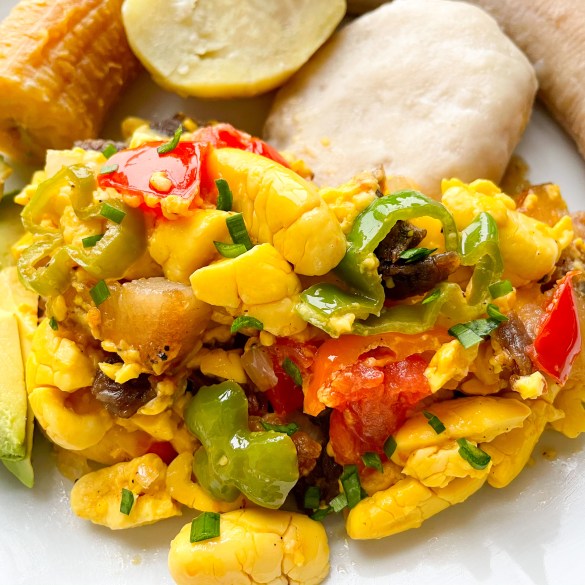
Corn pork can be eaten just cooked up with beans. It can be cooked in traditional stew peas, peas soup and is delightful if it substitutes the salted cod in with Ackee. I set my pork to brine in the refrigerator for two weeks prior to cooking it. I am not only using salt for this brine. I added peppercorns, scallions, onions, thyme, scotch bonnet, garlic and allspice berries for added flavor. For this recipe I am using Ackee I brought back frozen from Jamaica. Fresh Ackee is even better if you can find it. The saltiness and crunchiness from the pork and the creaminess of the Ackee brings such rich flavors and textures together. This Remix on the national dish is definitely a must try!
8 cups of water (use in 2 cup increments to remove excess salt from pork in 4 boils)
3 cups of water (for Ackee)
2 tsps salt (for Ackee)
1 dozen fresh Ackees
1 medium onion (chopped)
1 plum tomato (chopped)
2 tablespoon virgin coconut oil
1 teaspoon cracked pepper
Instructions
Corned pork:
Choose your favorite cut of pork. I used slices from a shoulder cut.
In a medium bowl with lid add pimento, 2 scotch bonnet peppers (reserve 1), chilli peppers, chopped garlic, chopped scallion, thyme, peppercorns and salt to a bowl with pork.
Wear gloves on your hands to rub spices and salt into meat. Cover bowl.
Keep covered in the fridge for at least 2 weeks — the longer the better.
Prepare corned pork:
Use about 1lb of prepared corned pork. Reserve the rest in the refrigerator for a stew or soup.
Cut pork into 3 inch pieces.
In a saucepan, boil the pork to remove excess salt and tenderize the meat. Once the water comes up to a boil, dump it and add fresh water. You may need to do this a number of times as it will be very salty. I do this a minimum of 4 times.
Once you have removed the excess salt, cut pork into smaller 1 inch pieces. In 2 tablespoon oil, pan fry pork in skillet until crispy.
Cover while frying. (Check the video to see why)
Remove fried pork from the pan and set aside on a plate.
Ackee:
Bring 3 cups of water to a boil in a medium saucepan . Add 2 tsps of salt to water
Boil Ackee until fork tender, about 10 minutes.
Drain Ackee in a colander and set aside.
Final cook:
In the same skillet cook onions, peppers and tomato in coconut oil until translucent.
Add drained Ackee, black pepper and gently tossed with a wooden spoon.
Add fried pork. Scoop and fold gently with a spoon to combine pork.
Add more black pepper if you wish.
Serve hot with your choice of sides. Mine was served with boiled “food” i.e dumpling, banana, plantains and sweet potato slices.
Notes
Leave pork for as long as you can but at least 2 weeks so the flavors can infuse in the meat.
Always cover pork when frying. The pieces tend to pop in hot oil and can escape the pan.
Music Credit: Yugen by Jeff Kale
Related
Follow Yanikie Tucker on Socials for Jamaican Recipe Inspiration
The process for making corned pork Filipino style involves marinating the pork in a mixture of salt, garlic, and spices before slow-cooking it until tender. Serve it with rice and accompanying vegetables for a hearty meal.
How to cook corned pork?
Cooking corned pork involves simmering it in water until tender, usually for about 1.5 to 2 hours. Afterward, drain, sauté with onions, bell peppers, and spices for added flavor. Enjoy it in a traditional Jamaican dish or with your favorite sides.
How to make corned pork recipe?
The process of making corned pork involves simmering the pork with aromatic spices, salt, and water until tender. Pair it with ackee and traditional seasonings for a flavorful Jamaican dish.
What are tips for cooking corned pork?
The tips for cooking corned pork include marinating it in spices for enhanced flavor, simmering it slowly to maintain tenderness, and ensuring it's cooked through without drying out. Always taste and adjust seasoning before serving.
How long should I cook corned pork?
The cooking time for corned pork is typically around 1.5 to 2 hours. Ensure it is cooked until tender and fully heated through, enhancing its flavors for a delicious dish.
What ingredients are needed for corned pork?
The ingredients needed for corned pork include pork shoulder or belly, salt, sugar, black pepper, allspice, and garlic. Optionally, spices like thyme and bay leaves can enhance the flavor during the curing process.
How to season corned pork for best flavor?
The best flavor for corned pork comes from using a blend of spices such as thyme, black pepper, garlic, and scotch bonnet pepper. Marinating the pork for several hours enhances the flavors, creating a deliciously seasoned dish.
Can I slow cook corned pork shoulder?
Slow cooking corned pork shoulder is definitely possible and can enhance its flavor and tenderness. Just ensure to adjust cooking times and seasonings to achieve the best results for your dish.
What method is best for cooking corned pork?
The best method for cooking corned pork is to simmer it slowly in water or broth until tender. This method allows the flavors to develop and results in a moist, flavorful dish perfect for incorporating into meals like Ackee and Corned Pork.
Are there traditional sides for corned pork?
Traditional sides for corned pork include rice and peas, fried plantains, and steamed vegetables, which complement the rich flavors of the dish while enhancing the overall dining experience.
How to tell when corned pork is done?
The doneness of corned pork can be determined by checking its internal temperature; it should reach at least 145°F (63°C). Additionally, the meat should be tender and easy to shred with a fork.
What is the ideal temperature for corned pork?
The ideal temperature for corned pork is 145°F (63°C). This ensures the meat is safely cooked while retaining its tenderness and flavor, making it perfect for traditional dishes like Ackee and Corned Pork.
How to slice cooked corned pork properly?
Slicing cooked corned pork properly involves using a sharp knife to cut against the grain in thin, even slices. This technique ensures tender pieces that enhance the flavor and texture in your dishes.
Can you boil corned pork for faster cooking?
Boiling corned pork can indeed speed up the cooking process. This method reduces cooking time while ensuring the meat becomes tender, making it a practical option for preparing Ackee and Corned Pork quickly.
What variations exist for corned pork recipes?
Variations for corned pork recipes include adding different spices such as allspice or thyme, incorporating vegetables like bell peppers or onions, and using various cooking methods like baking or slow-cooking to enhance flavors.
How to achieve tender corned pork every time?
Achieving tender corned pork every time requires simmering it slowly in a flavorful liquid. Use enough moisture, and avoid overcooking to ensure the meat remains juicy and tender. Adjust cooking times based on thickness for best results.
What are common mistakes in cooking corned pork?
Common mistakes in cooking corned pork include not soaking the meat long enough to reduce excess salt, neglecting to trim the fat which can lead to greasiness, and undercooking, which prevents the flavors from fully developing.
How to store leftover corned pork safely?
The safe storage of leftover corned pork involves placing it in an airtight container and refrigerating it within two hours of cooking. Consume within three to four days for optimal freshness and safety.
What dishes pair well with corned pork?
Dishes that pair well with corned pork include traditional sides like rice and peas, fried plantains, and steamed vegetables, which complement the savory flavors and enhance the meal's overall authenticity.
How to elevate flavor in corned pork dishes?
To elevate flavor in corned pork dishes, incorporate aromatic herbs like thyme and scallions, use spices such as allspice and black pepper, and enhance with a splash of citrus or a dash of hot sauce for added complexity.
How to marinate corned pork for more taste?
Marinating corned pork enhances its flavor significantly. To do this, combine ingredients like garlic, thyme, allspice, and a splash of lime juice in a bowl. Let the pork soak in this mixture for at least 2 hours, or overnight for deeper taste.
Can I grill corned pork for a smoky flavor?
Grilling corned pork can indeed infuse it with a delicious smoky flavor. Ensure to use a medium heat and add wood chips to the grill for enhanced smokiness while maintaining moisture for the best results.
What is the nutrition content of corned pork?
The nutrition content of corned pork includes essential nutrients such as protein, fats, vitamins, and minerals. A typical serving offers significant protein, healthy fats, and contributes to your daily intake of thiamine and phosphorus, though it can be high in sodium.
How to reheat corned pork without drying it?
Reheating corned pork without drying it requires gentle methods. Use a skillet over low heat with a splash of water or broth, covering it to retain moisture, or microwave it with a damp paper towel to prevent dryness.
What wine pairs best with corned pork?
The best wine pairing for corned pork is a light to medium-bodied red wine, such as Pinot Noir, which complements the savory and slightly salty flavors of the dish beautifully.
How to use corned pork in tacos?
Using corned pork in tacos is simple: just shred or chop the cooked corned pork, season it with your favorite spices, and then fill soft or hard taco shells with the meat. Add toppings like avocado, salsa, and fresh cilantro for extra flavor.
What are variations of corned pork in cuisine?
Variations of corned pork in cuisine include dishes like corned beef, commonly found in Irish and American cooking, and various spiced pork preparations in Caribbean and Latin American cuisines, showcasing diverse flavor profiles and cooking methods.
How can I modify a corned pork recipe?
Modifying a corned pork recipe can be done by adjusting the spices, using different cooking methods, or incorporating various vegetables and fruits to complement the dish, allowing for personalized flavors while maintaining its traditional essence.
Is corned pork shoulder better than corned pork belly?
The comparison between corned pork shoulder and corned pork belly involves flavor and texture preferences. Corned pork shoulder is leaner and slightly firmer, while pork belly is richer and more flavorful due to its fat content. Ultimately, it depends on your desired dish and taste.
The process for making corned pork Filipino style involves marinating the pork in a mixture of salt, garlic, and spices before slow-cooking it until tender. Serve it with rice and accompanying vegetables for a hearty meal.
How to cook corned pork?
Cooking corned pork involves simmering it in water until tender, usually for about 1.5 to 2 hours. Afterward, drain, sauté with onions, bell peppers, and spices for added flavor. Enjoy it in a traditional Jamaican dish or with your favorite sides.
How to make corned pork recipe?
The process of making corned pork involves simmering the pork with aromatic spices, salt, and water until tender. Pair it with ackee and traditional seasonings for a flavorful Jamaican dish.
What are tips for cooking corned pork?
The tips for cooking corned pork include marinating it in spices for enhanced flavor, simmering it slowly to maintain tenderness, and ensuring it's cooked through without drying out. Always taste and adjust seasoning before serving.
How long should I cook corned pork?
The cooking time for corned pork is typically around 1.5 to 2 hours. Ensure it is cooked until tender and fully heated through, enhancing its flavors for a delicious dish.
What ingredients are needed for corned pork?
The ingredients needed for corned pork include pork shoulder or belly, salt, sugar, black pepper, allspice, and garlic. Optionally, spices like thyme and bay leaves can enhance the flavor during the curing process.
How to season corned pork for best flavor?
The best flavor for corned pork comes from using a blend of spices such as thyme, black pepper, garlic, and scotch bonnet pepper. Marinating the pork for several hours enhances the flavors, creating a deliciously seasoned dish.
Can I slow cook corned pork shoulder?
Slow cooking corned pork shoulder is definitely possible and can enhance its flavor and tenderness. Just ensure to adjust cooking times and seasonings to achieve the best results for your dish.
What method is best for cooking corned pork?
The best method for cooking corned pork is to simmer it slowly in water or broth until tender. This method allows the flavors to develop and results in a moist, flavorful dish perfect for incorporating into meals like Ackee and Corned Pork.
Are there traditional sides for corned pork?
Traditional sides for corned pork include rice and peas, fried plantains, and steamed vegetables, which complement the rich flavors of the dish while enhancing the overall dining experience.
How to tell when corned pork is done?
The doneness of corned pork can be determined by checking its internal temperature; it should reach at least 145°F (63°C). Additionally, the meat should be tender and easy to shred with a fork.
What is the ideal temperature for corned pork?
The ideal temperature for corned pork is 145°F (63°C). This ensures the meat is safely cooked while retaining its tenderness and flavor, making it perfect for traditional dishes like Ackee and Corned Pork.
How to slice cooked corned pork properly?
Slicing cooked corned pork properly involves using a sharp knife to cut against the grain in thin, even slices. This technique ensures tender pieces that enhance the flavor and texture in your dishes.
Can you boil corned pork for faster cooking?
Boiling corned pork can indeed speed up the cooking process. This method reduces cooking time while ensuring the meat becomes tender, making it a practical option for preparing Ackee and Corned Pork quickly.
What variations exist for corned pork recipes?
Variations for corned pork recipes include adding different spices such as allspice or thyme, incorporating vegetables like bell peppers or onions, and using various cooking methods like baking or slow-cooking to enhance flavors.
How to achieve tender corned pork every time?
Achieving tender corned pork every time requires simmering it slowly in a flavorful liquid. Use enough moisture, and avoid overcooking to ensure the meat remains juicy and tender. Adjust cooking times based on thickness for best results.
What are common mistakes in cooking corned pork?
Common mistakes in cooking corned pork include not soaking the meat long enough to reduce excess salt, neglecting to trim the fat which can lead to greasiness, and undercooking, which prevents the flavors from fully developing.
How to store leftover corned pork safely?
The safe storage of leftover corned pork involves placing it in an airtight container and refrigerating it within two hours of cooking. Consume within three to four days for optimal freshness and safety.
What dishes pair well with corned pork?
Dishes that pair well with corned pork include traditional sides like rice and peas, fried plantains, and steamed vegetables, which complement the savory flavors and enhance the meal's overall authenticity.
How to elevate flavor in corned pork dishes?
To elevate flavor in corned pork dishes, incorporate aromatic herbs like thyme and scallions, use spices such as allspice and black pepper, and enhance with a splash of citrus or a dash of hot sauce for added complexity.
How to marinate corned pork for more taste?
Marinating corned pork enhances its flavor significantly. To do this, combine ingredients like garlic, thyme, allspice, and a splash of lime juice in a bowl. Let the pork soak in this mixture for at least 2 hours, or overnight for deeper taste.
Can I grill corned pork for a smoky flavor?
Grilling corned pork can indeed infuse it with a delicious smoky flavor. Ensure to use a medium heat and add wood chips to the grill for enhanced smokiness while maintaining moisture for the best results.
What is the nutrition content of corned pork?
The nutrition content of corned pork includes essential nutrients such as protein, fats, vitamins, and minerals. A typical serving offers significant protein, healthy fats, and contributes to your daily intake of thiamine and phosphorus, though it can be high in sodium.
How to reheat corned pork without drying it?
Reheating corned pork without drying it requires gentle methods. Use a skillet over low heat with a splash of water or broth, covering it to retain moisture, or microwave it with a damp paper towel to prevent dryness.
What wine pairs best with corned pork?
The best wine pairing for corned pork is a light to medium-bodied red wine, such as Pinot Noir, which complements the savory and slightly salty flavors of the dish beautifully.
How to use corned pork in tacos?
Using corned pork in tacos is simple: just shred or chop the cooked corned pork, season it with your favorite spices, and then fill soft or hard taco shells with the meat. Add toppings like avocado, salsa, and fresh cilantro for extra flavor.
What are variations of corned pork in cuisine?
Variations of corned pork in cuisine include dishes like corned beef, commonly found in Irish and American cooking, and various spiced pork preparations in Caribbean and Latin American cuisines, showcasing diverse flavor profiles and cooking methods.
How can I modify a corned pork recipe?
Modifying a corned pork recipe can be done by adjusting the spices, using different cooking methods, or incorporating various vegetables and fruits to complement the dish, allowing for personalized flavors while maintaining its traditional essence.
Is corned pork shoulder better than corned pork belly?
The comparison between corned pork shoulder and corned pork belly involves flavor and texture preferences. Corned pork shoulder is leaner and slightly firmer, while pork belly is richer and more flavorful due to its fat content. Ultimately, it depends on your desired dish and taste.